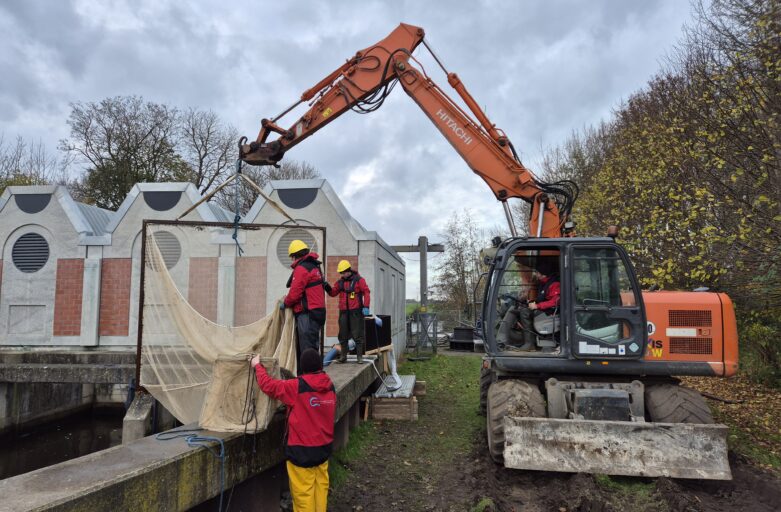
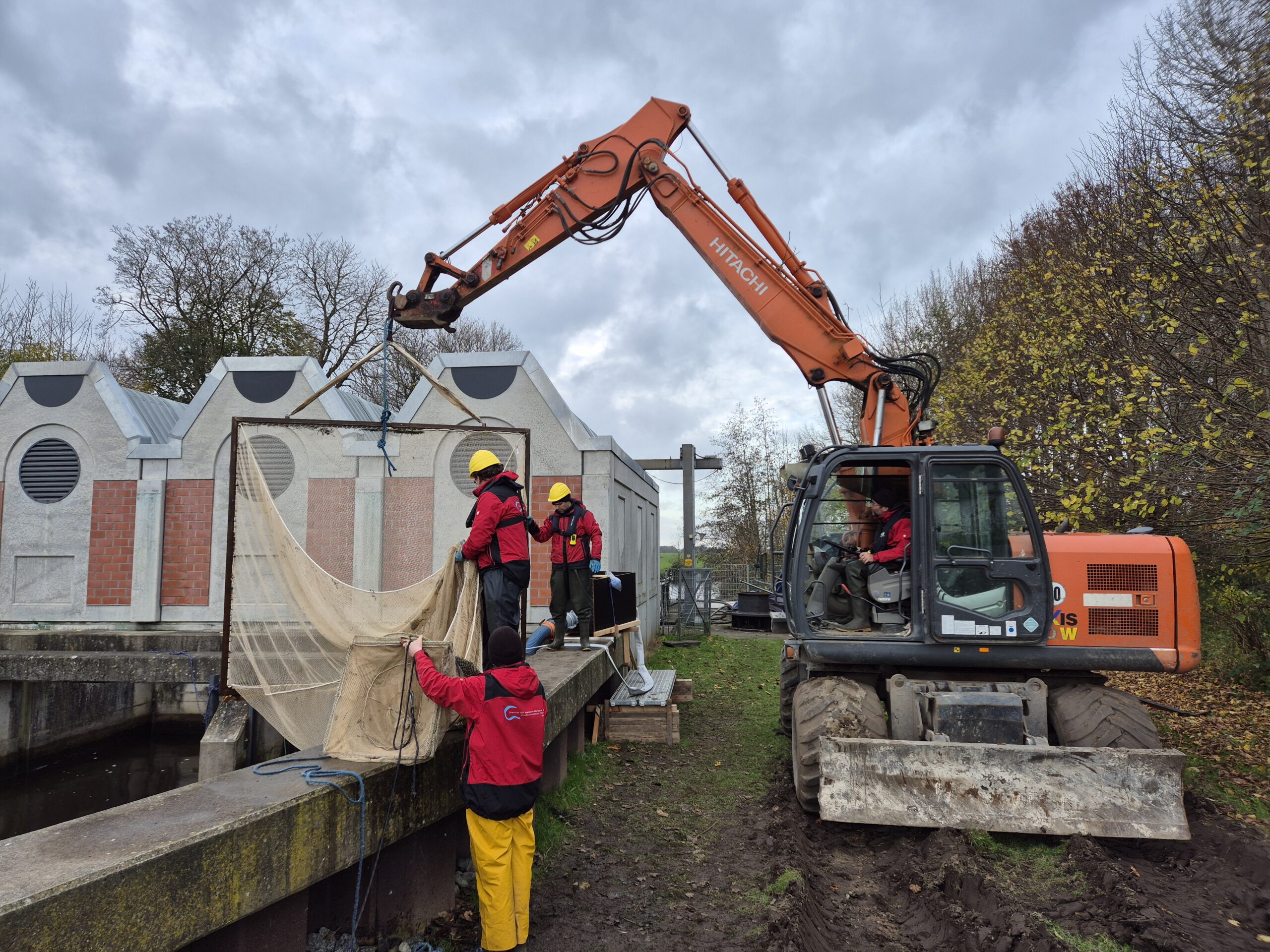
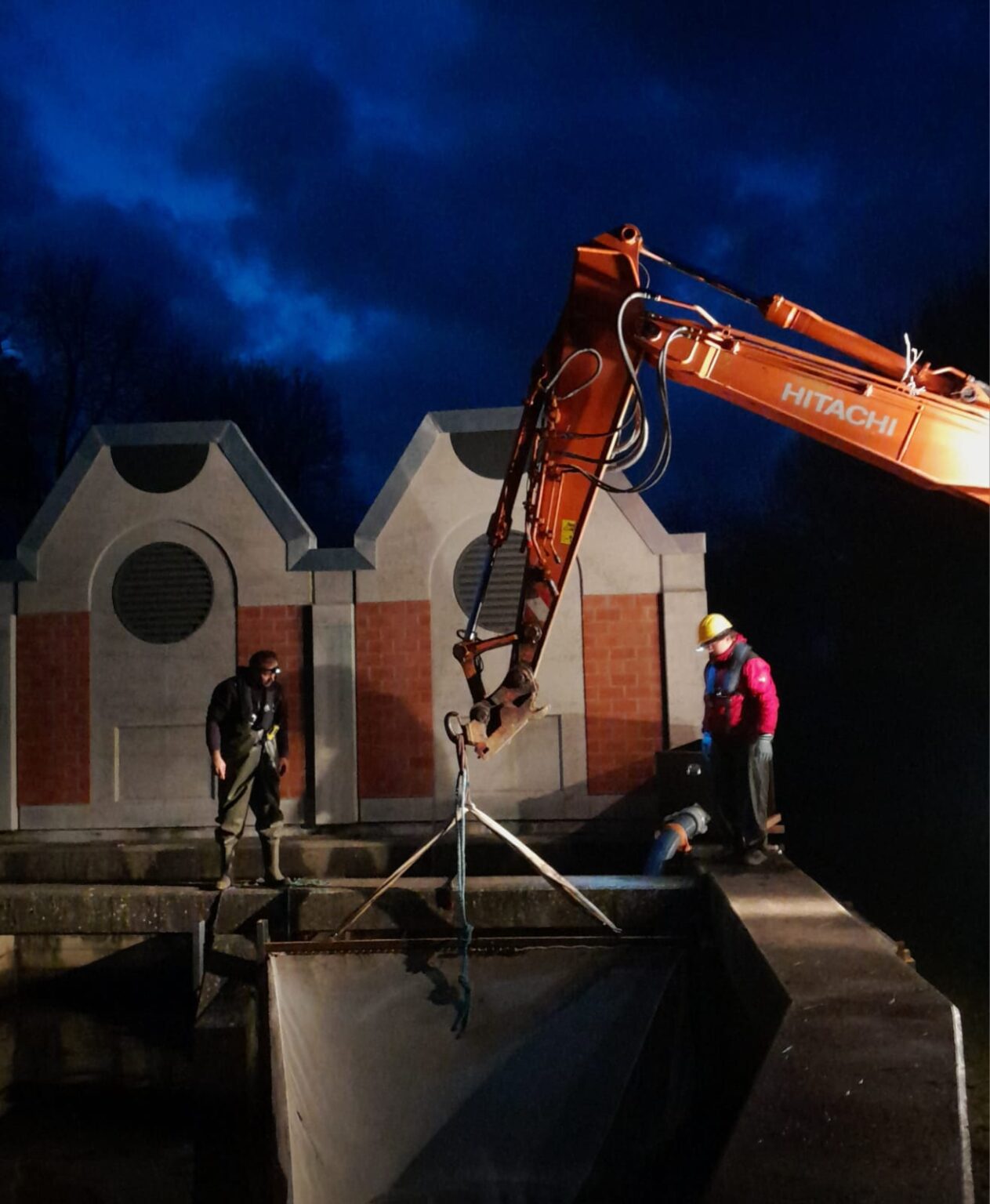
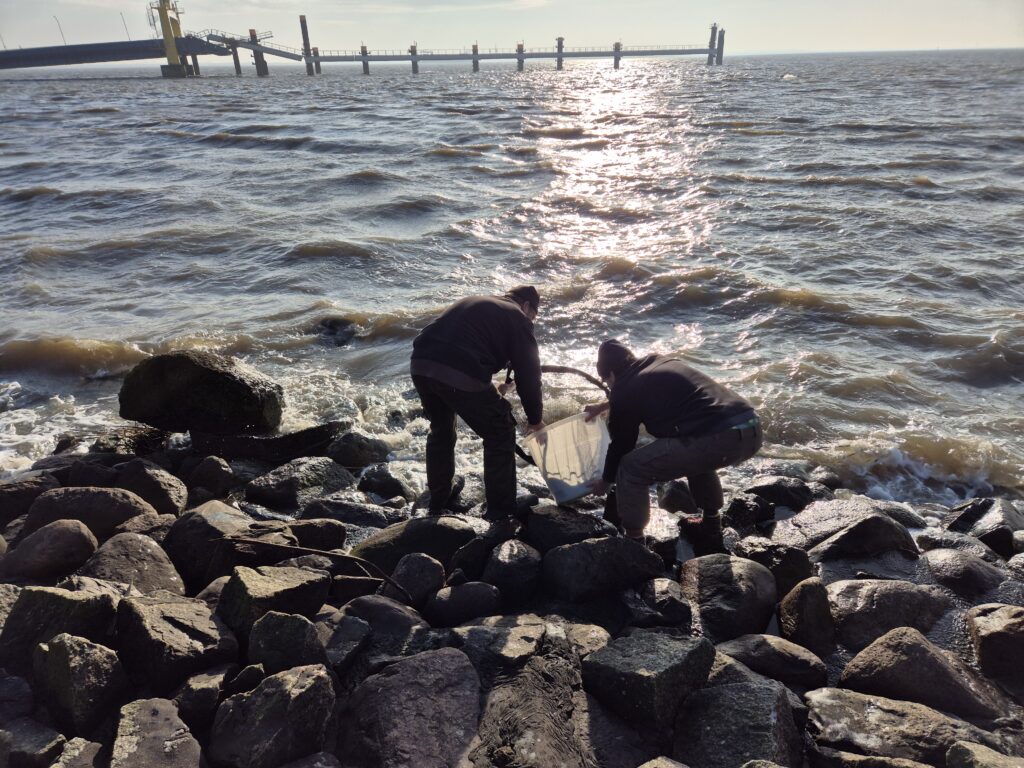
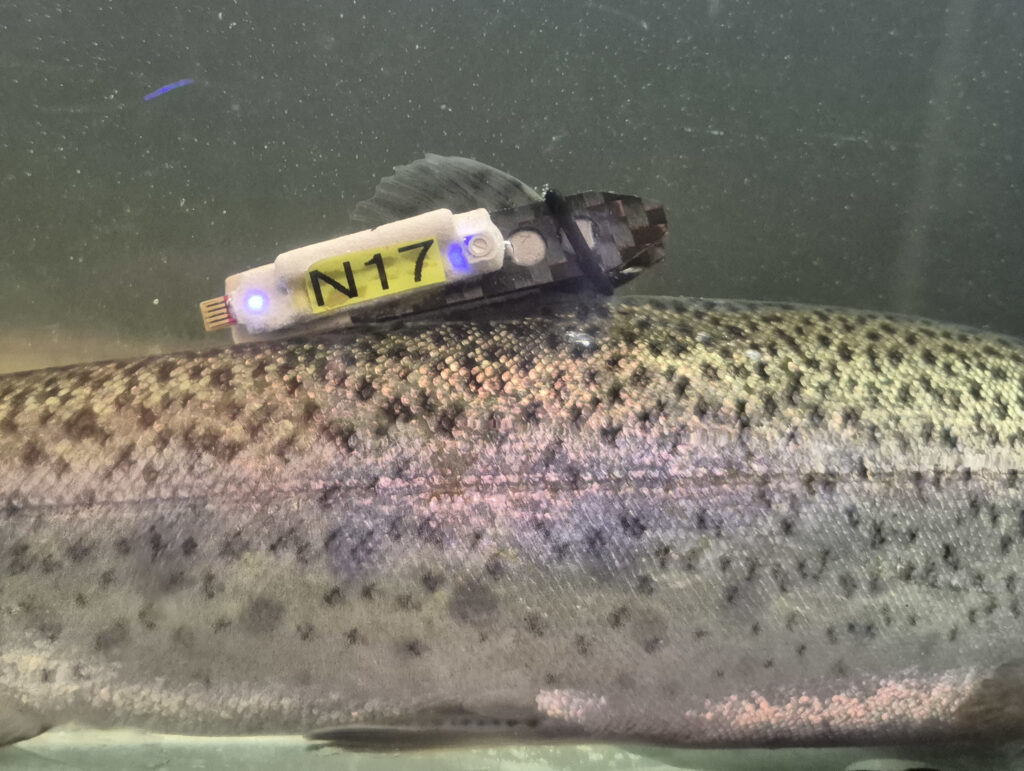
Pumping stations often interrupt vital fish migration routes, with potentially fatal consequences. At the Kudensee pumping station in Schleswig-Holstein, a newly developed axial pump designed to significantly reduce the mortality risk of fish when passing through the pump has now been tested for the first time.
Installed in August 2024, the pump prototype was developed by a consortium consisting of Otto von Guericke University Magdeburg, Tallinn University of Technology, Université Grenoble Alpes, and the Institute for Aquatic Ecology & Fish Biology Jena, together with the manufacturer KSB Service GmbH. The goal was to develop a fish-friendly pump that could replace existing machinery without substantial structural modifications at the pumping station.